LifespanUp to 30 years in the wild, and up to 50 years under human care.
Quick Facts

Pygmy Hippos

River Relatives
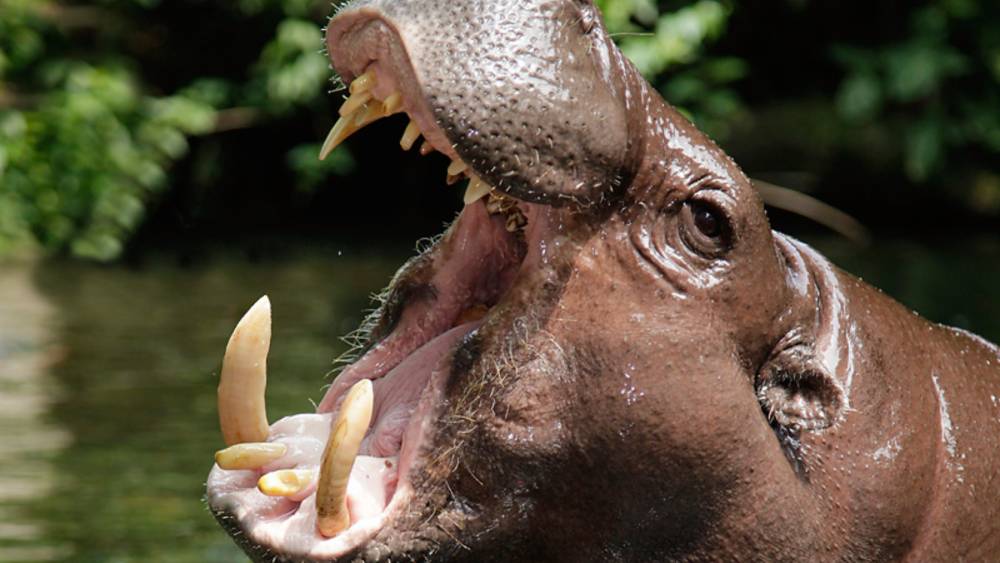
Pygmy hippos weigh approximately up to 250kg, only a tenth the weight of their more common cousins! Though adapted for water, they are actually less aquatic than river hippos.
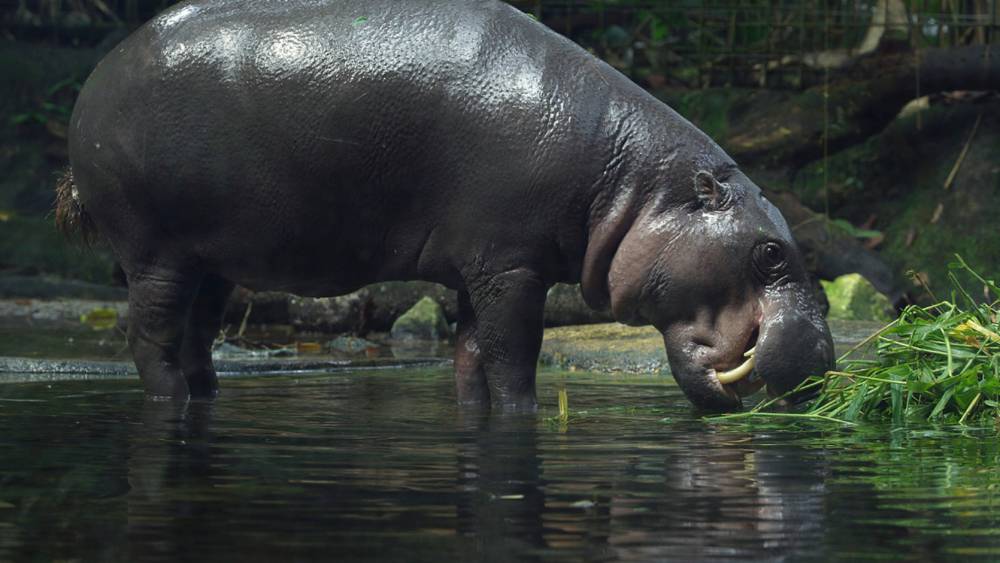
Their nostrils and ears also close underwater, but pygmy hippos have rounder, narrower heads, longer necks, and eyes positioned more to the sides. Their feet are also less webbed, while their longer legs suit life on land. They also have just one pair of incisors, compared to two or three in river hippos.
Sweaty Sunscreen
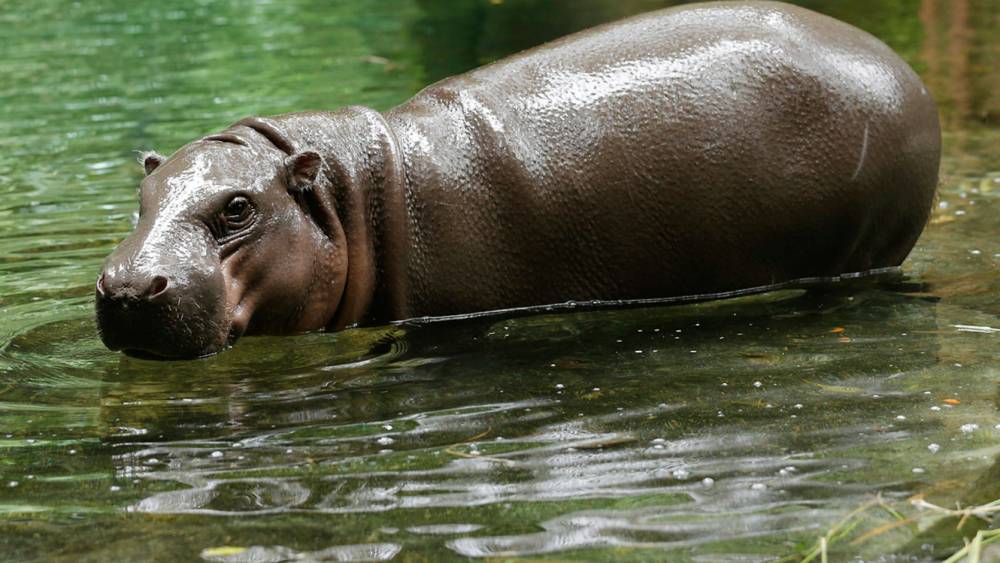
Their smooth, thin, greenish-black skin helps them stay cool in humid rainforests but makes them prone to dehydration. To protect themselves, pygmy hippos secrete a pink, oily fluid—often called “blood sweat”—which coats their skin, helping to prevent sunburn and maintain moisture.
Solitary and Nocturnal
While mostly solitary, these hippos may occasionally form small family groups. Males, called bulls, have larger territories than cows (females) and both mark their homes with droppings. Pygmy hippos are also mainly nocturnal, resting in water or mud during the day and emerging at night to feed on vegetation under cooler conditions.
Together, We Protect Wildlife
Safeguarding Species
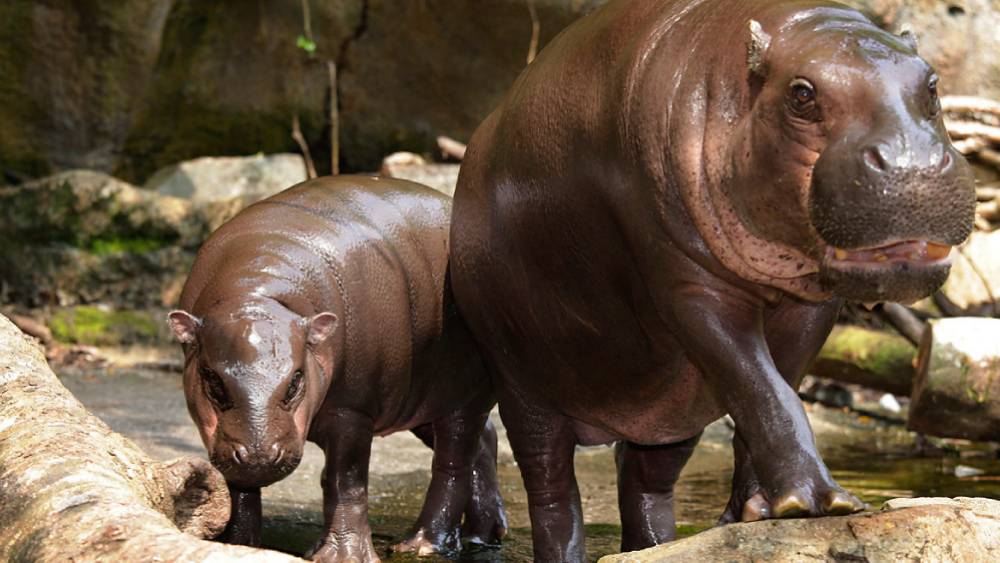
Fewer than 2,500 pygmy hippos remain in the wild, threatened by deforestation, river pollution, and hunting in logged areas. We work with member zoos to sustain the population of pygmy hippos under human care.
Transfer of individuals for breeding enhances genetic diversity to maintain a healthy population. To date, we have sent more than 24 pygmy hippos to zoos around the world to participate in global breeding programmes.
The IUCN Status
EN
Endangered
At very high risk of extinction in the wild

The IUCN Red List of Threatened Species
The IUCN Red List of Threatened Species is widely recognized as the most comprehensive, objective global approach for evaluating the conservation status of plant and animal species.
DD
Data Deficient
Unknown risk of extinction
LC
Least Concern
At relatively low risk of extinction
NT
Near Threatened
Likely to become vulnerable in the near future
VU
Vulnerable
At high risk of extinction in the wild
EN
Endangered
At very high risk of extinction in the wild
CR
Critically Endangered
At extremely high risk of extinction in the wild
EW
Extinct in the Wild
Survives only in captivity
EX
Extinct
No surviving individuals in the wild or in captivity