LifespanUp to 25 years
Quick Facts


DietLeaves, fruit, buds, flowers, bamboo shoots, and seeds

HabitatFrom lowland to montane rainforests

RangeVietnam, Laos, and Northern Cambodia
Red-shanked Doucs

“Queen Of Primates”
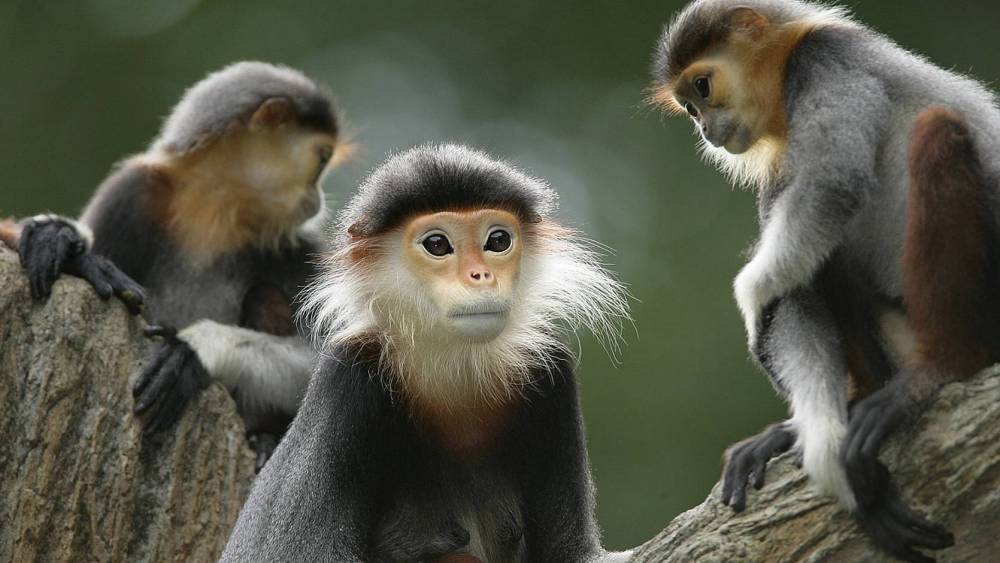
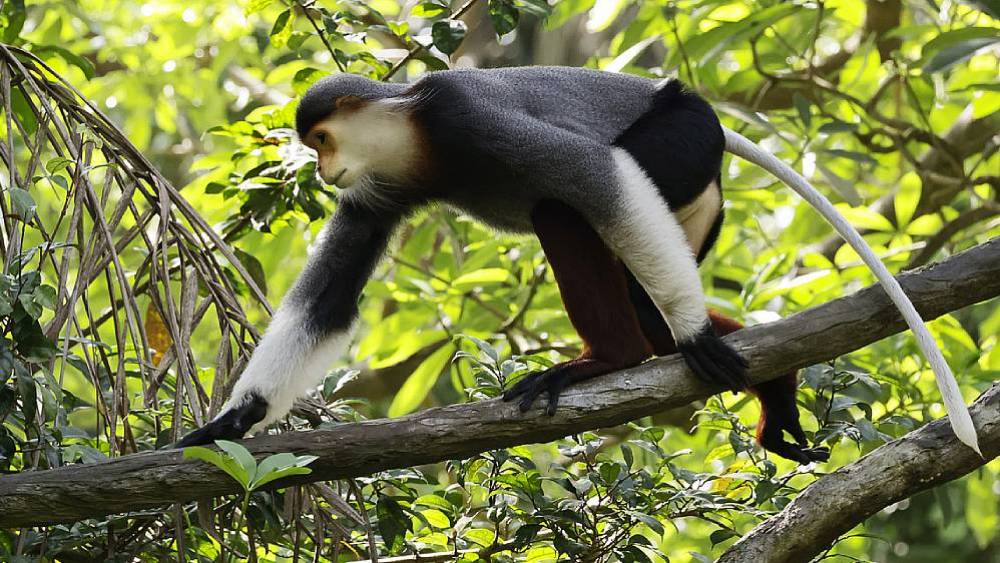
Known as the “Queen of primates,” these langurs boast a vivid, multi-coloured appearance, making them among the most striking primates. Primarily arboreal, they spend most of their time high in the forest canopy, even sleeping there.
Generous Nature
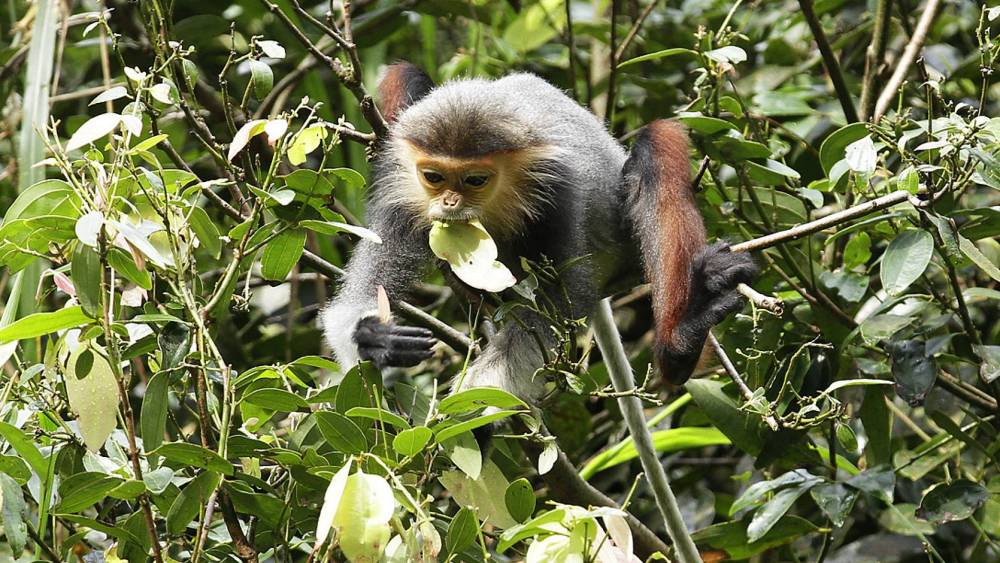
Red-shanked doucs mainly eat leaves, relying on a four-chambered stomach that ferments fibrous plant material.
With that said, they are still rather flexible eaters, consuming a wide range of foods throughout the seasons.
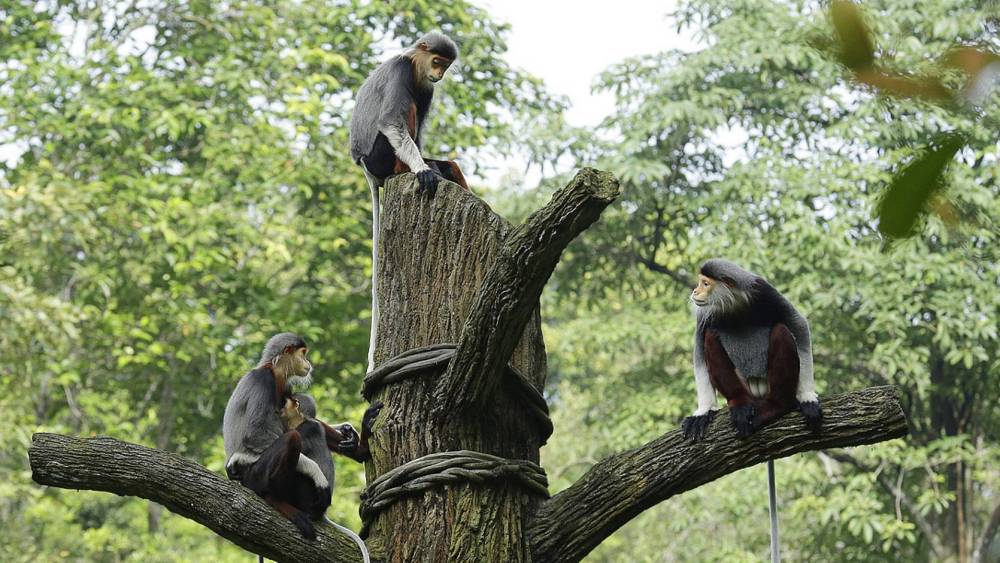
Remarkably, these langurs share meals, peacefully breaking foliage and passing it to one another, showing a communal and generous nature when foraging.
Distinct Communicators
Red-shanked doucs also use a variety of facial expressions for communication, including a “play face” - a partially bared mouth and chin thrust forward.
They also have distinct signals, like a fixed stare for threats and a grimace for submission. During play, they sometimes blink to display their light blue eyelids.
Agile Aerialists
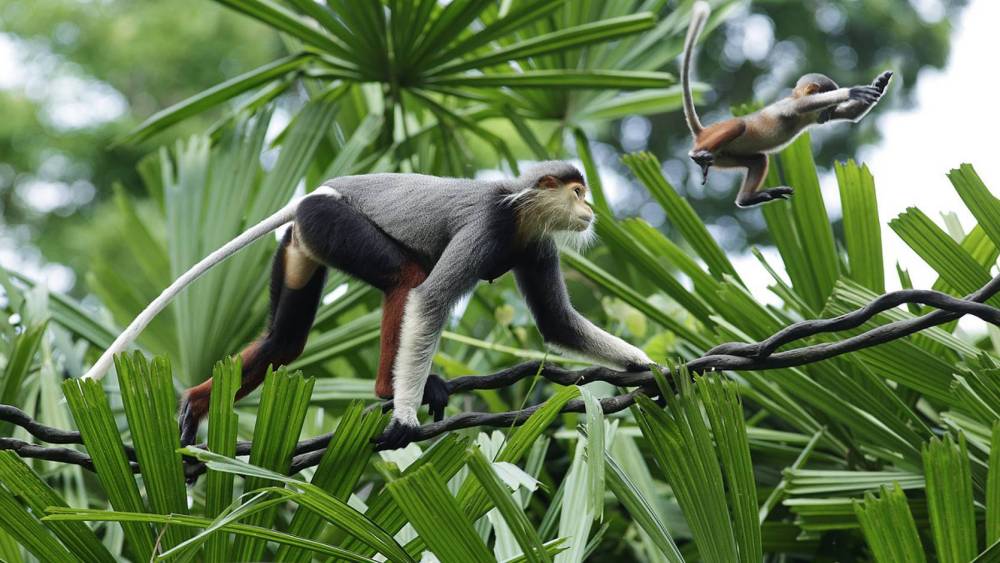
Living in groups averaging 18 members, red-shanked doucs are agile aerialists, leaping up to six metres in the forest canopy.
Adult males lead the group during movement, with juveniles in the rear and females and infants safely in the middle.
Although their tails aren’t prehensile, they use them for balance while navigating the treetops.
Critically Endangered
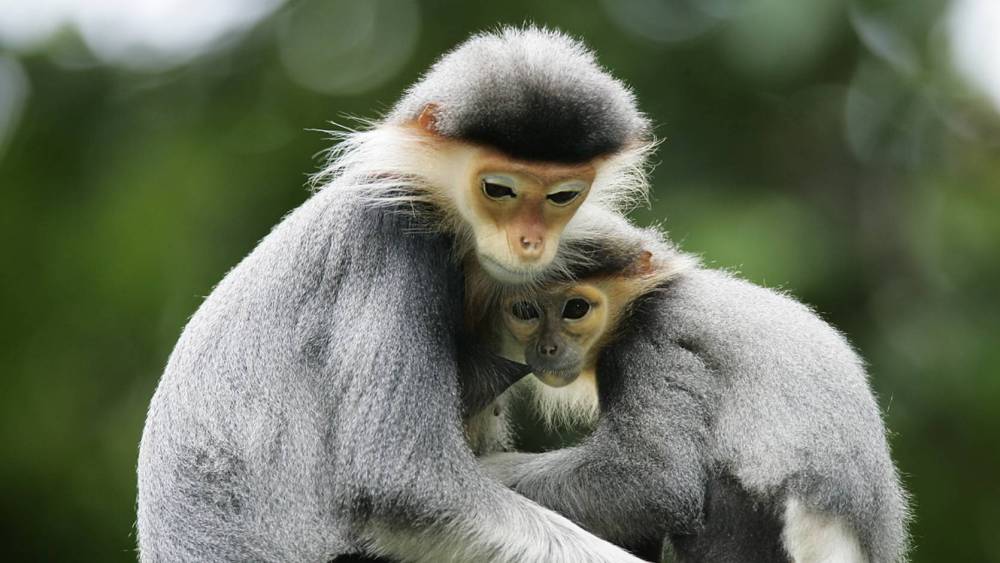
In 2020, the IUCN classified red-shanked doucs as critically endangered due to their continuous declining population.
Hunting poses a severe threat, driven by demand for meat, traditional medicine, and the pet trade.
Habitat fragmentation and agricultural land conversion further endanger the species, making conservation efforts crucial for their survival.
Together, We Protect Wildlife
Breeding success
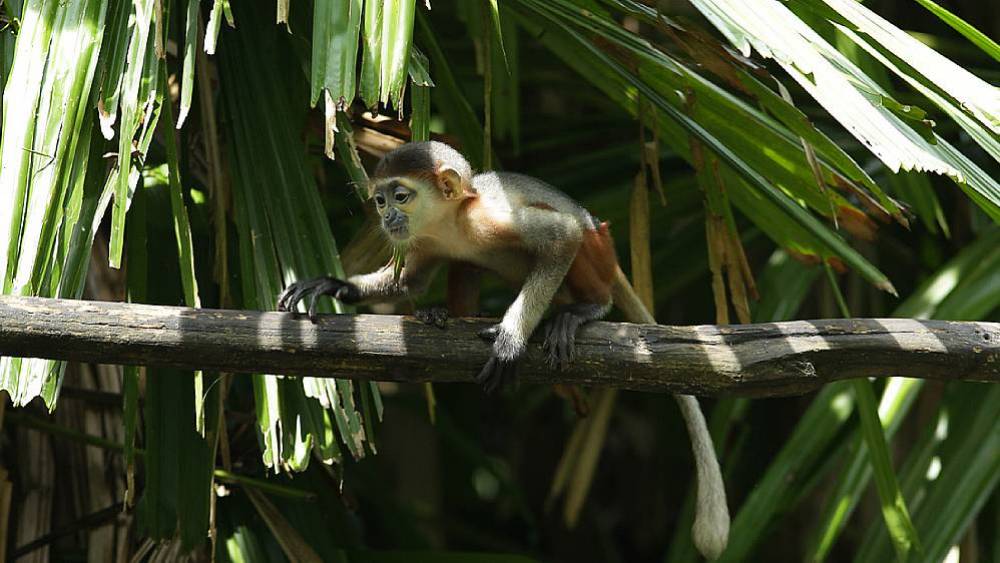
We are proud to have successfully bred critically endangered species like the red-shanked doucs in our parks.
Their birth aligns to our long-term managed plan to sustain the population of this critically endangered leaf monkey under our care.
The IUCN Status
CR
Critically Endangered
At extremely high risk of extinction in the wild
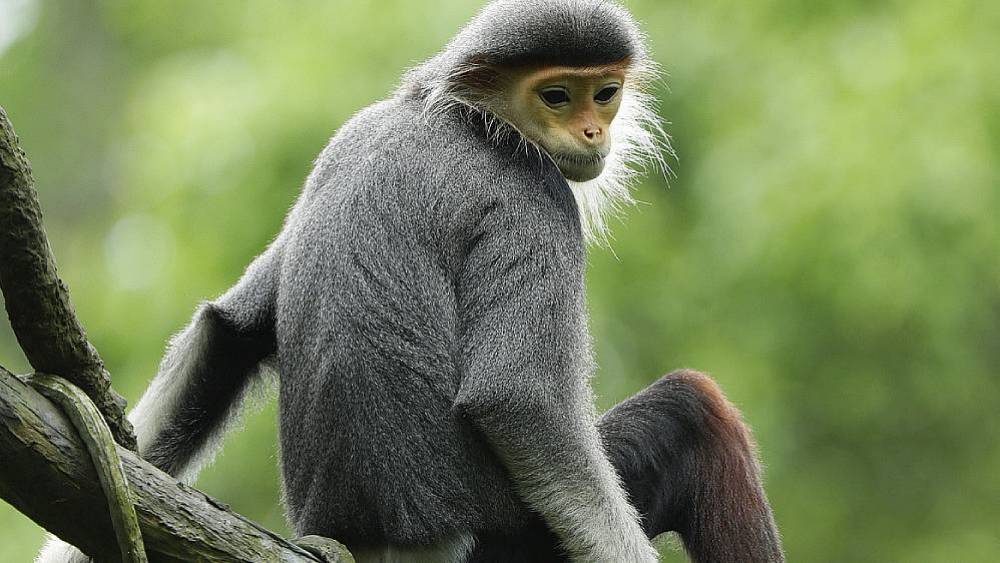
Protecting Laos Wildlife
Association Anoulak is committed to conserving threatened wildlife in Laos PDR, including the critically endangered red-shanked douc, white-cheeked gibbon, and saola.
Since 2015, we have supported large-scale monitoring efforts in the Annamite Mountains to guide effective conservation strategies.
The IUCN Status
CR
Critically Endangered
At extremely high risk of extinction in the wild
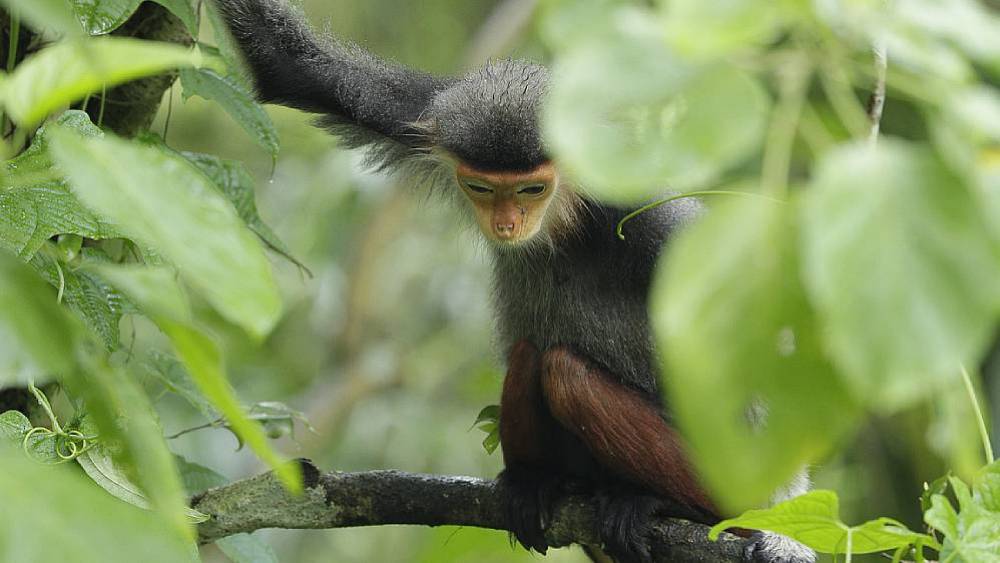
Research-driven Conservation
We also back species-specific research which provides crucial data to inform protection measures, both locally and regionally, ensuring these species have a better chance of survival in their natural habitats.
The IUCN Status
CR
Critically Endangered
At extremely high risk of extinction in the wild
Anti-poaching Patrols
Made up of trained local community members, six anti-poaching patrol teams, managed by national park staff, cover over 10,000 kilometres annually.
By removing snares and reporting illegal activities, they help enforce laws and protect forest wildlife in Nakai-Nam Theun National Park.
The IUCN Status
CR
Critically Endangered
At extremely high risk of extinction in the wild

The IUCN Red List of Threatened Species
The IUCN Red List of Threatened Species is widely recognized as the most comprehensive, objective global approach for evaluating the conservation status of plant and animal species.
DD
Data Deficient
Unknown risk of extinction
LC
Least Concern
At relatively low risk of extinction
NT
Near Threatened
Likely to become vulnerable in the near future
VU
Vulnerable
At high risk of extinction in the wild
EN
Endangered
At very high risk of extinction in the wild
CR
Critically Endangered
At extremely high risk of extinction in the wild
EW
Extinct in the Wild
Survives only in captivity
EX
Extinct
No surviving individuals in the wild or in captivity
Ranger Talk
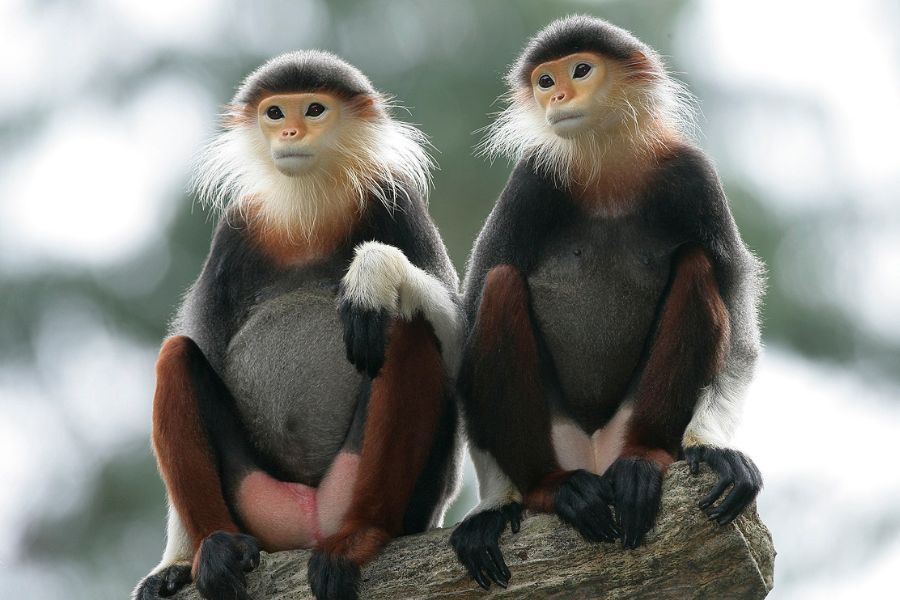
Langurs & Siamang Ranger Talk
Daily The Canopy 11:30am & 3:30pmListen for the loud calls of the Siamangs as they swing in the trees.
Find the colourful Red-shanked doucs and learn more about their diet from our ranger.