Lifespan Up to 100 years
Quick facts

Diet Fish

Habitat Freshwater

Range India, Nepal, Bangladesh. Extinct in Myanmar & Pakistan
The Indian gharials

Endangered crocodilian
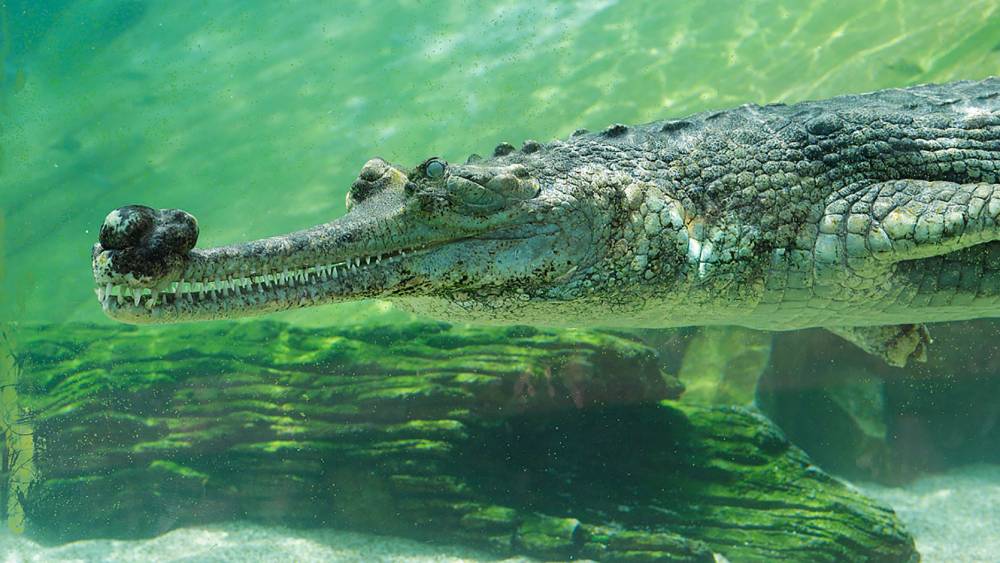
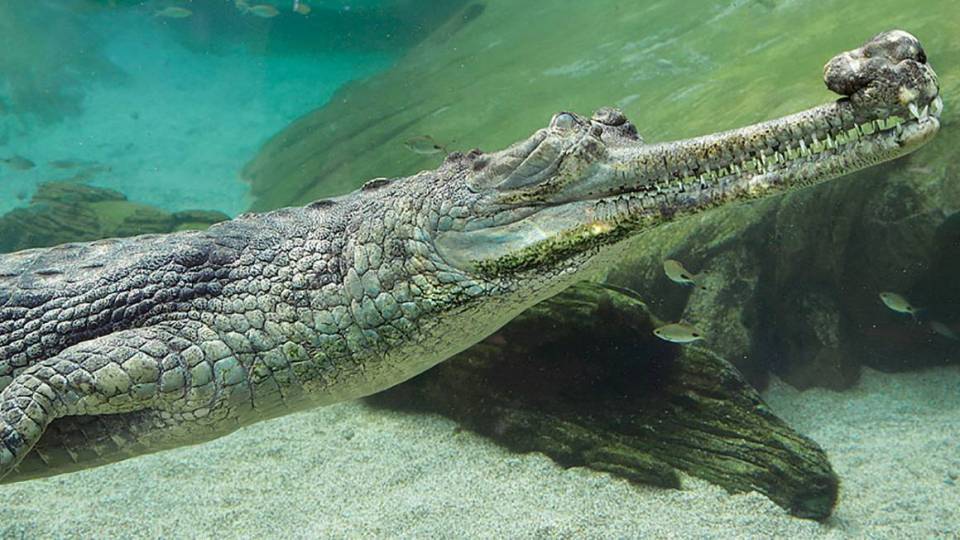
The Indian gharial is related to crocodiles and alligators. A critically endangered species, it used to occur in the rivers of Pakistan and Myanmar. Today, it is estimated that fewer than 200 Indian gharials are left in the wild, mostly in India, and a small number in Nepal and Bangladesh.
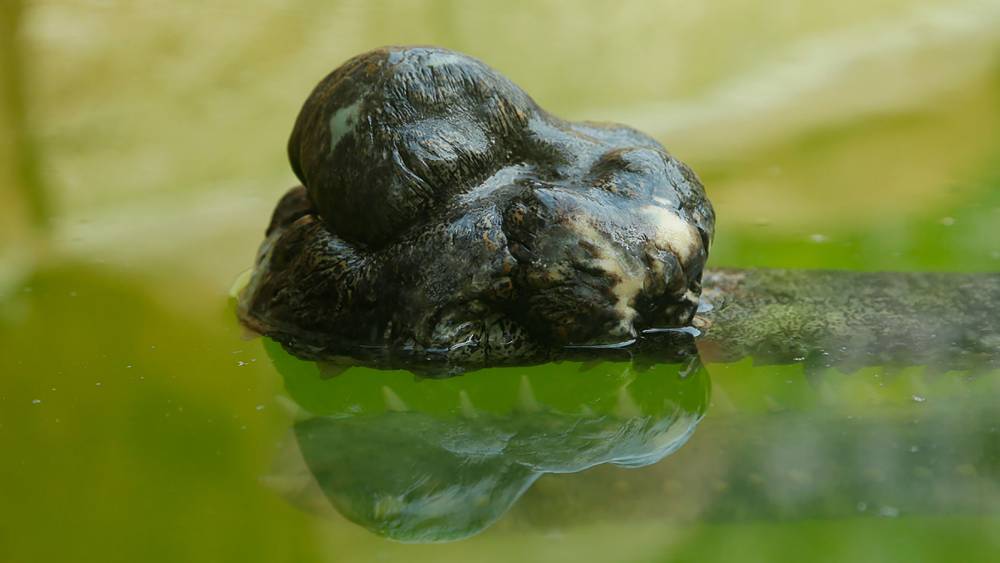
The gharial’s ghara
The gharial gets its name from its ‘ghara’, which means `pot’ in Hindi. This is a bulbous growth on the tip of the male’s snout with a cartilaginous lid on the nostrils that flaps during exhalation. The ghara amplifies the male’s hissing calls to attract females, making them audible from almost a kilometre away. Unfortunately, few mature males are now observed in the wild. Though gharials nest annually, some females in India were found to be nesting much less frequently.
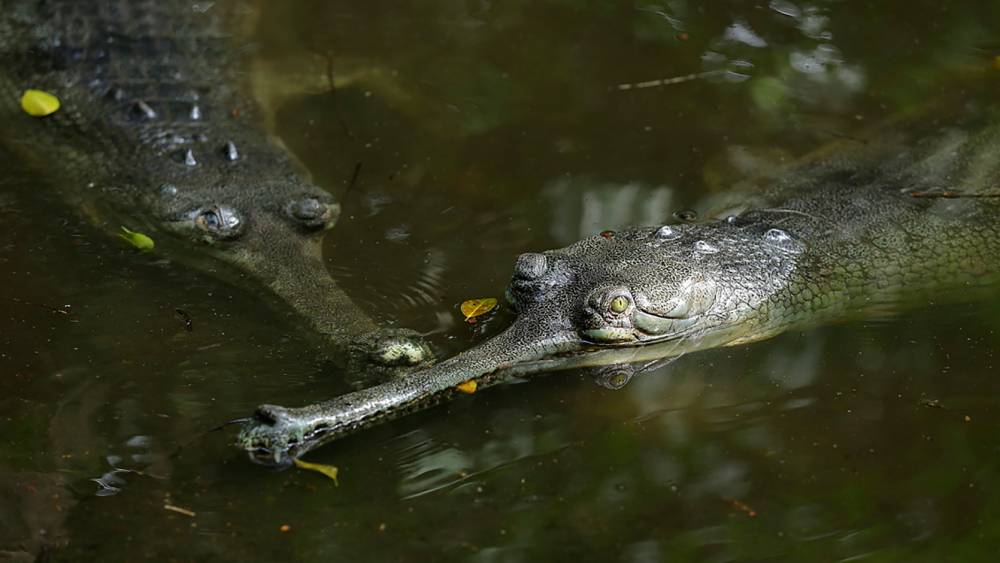
Gharial guardians
Females lay their eggs in nests dug into sandy riverbanks. Though they remain in the water in the day, they visit and guard the eggs at night, throughout the incubation period of 60-80 days. They get very territorial near the nest, but will tolerate other females nesting nearby. The mother, sometimes the father as well, may help uncover the nest during hatching. Due to their unique snout and teeth, they may not be able to help their babies hatch or pick them up.
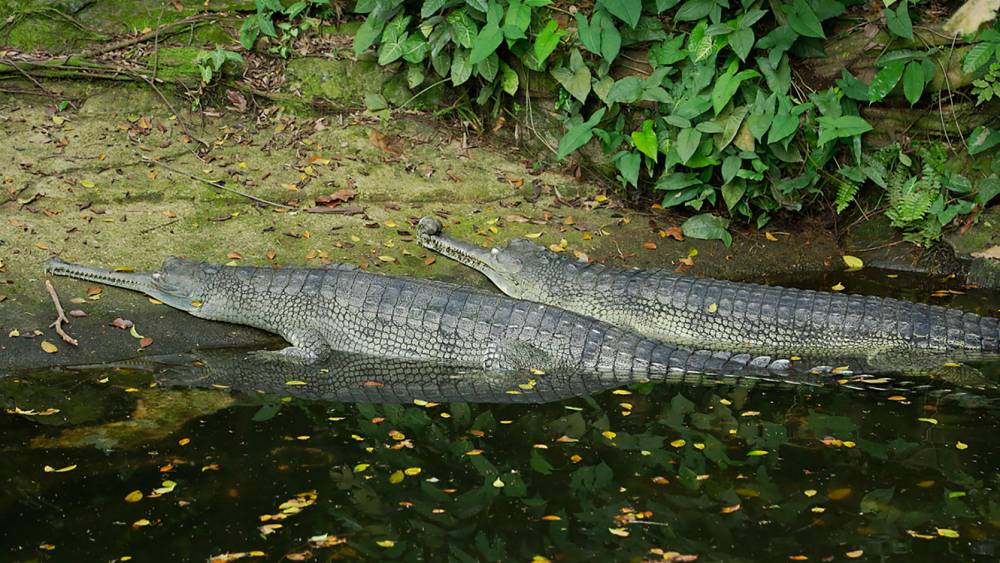
Care of the young
Mothers will protect hatchlings for several weeks or months. During this time, the hatchlings hang around in groups near their mother. The presence of the father may be tolerated, but he will not actively protect hatchlings. The young may sometimes rest on his back. Often, the rising waters of the monsoon prompt the separation of mother and young. The juveniles are washed downriver, away from their mother’s protection. Sadly, many young gharials do not survive this.
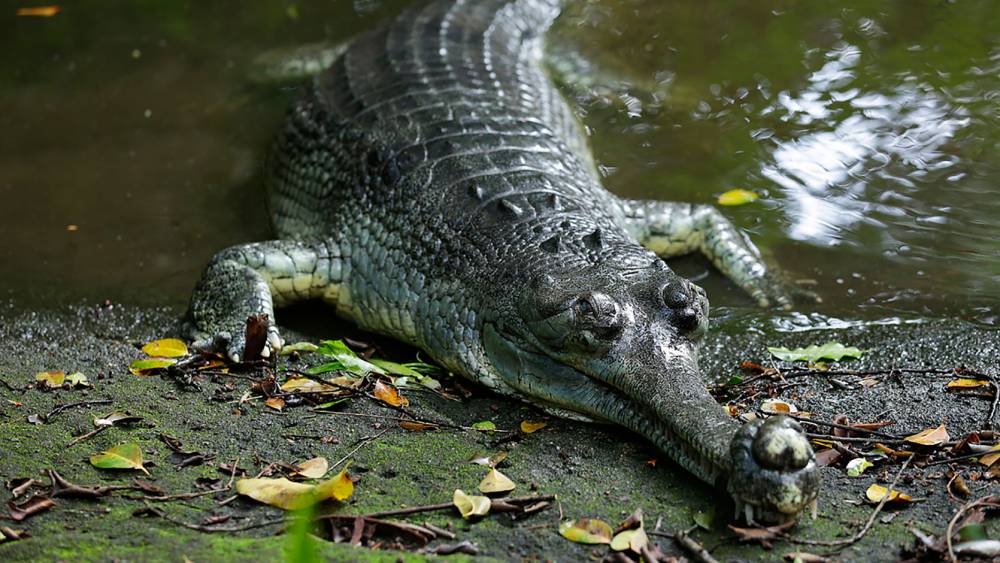
Banking on the sand
Large-scale sand mining for construction degrade the sand banks on which the gharials nest. Dams and irrigation diversions have resulted in perennial rivers drying up. Unlike other crocodilians, the gharial can’t walk overland to find other water sources. During the dry months, when gharials breed, riparian people, among the poorest in India, plant crops and herd livestock along the river, competing with the gharials for precious riverine real estate.
The family
Together, we protect wildlife
Dramatic decline
In the span of 60 years, their population has plummeted 98%. Since the 1970s, much money and effort have been spent on the reintroduction of gharials, with scant success.
Besides the gharial, other freshwater species like the Ganges river dolphin, mugger crocodile, and mahseer are also on the decline.
The IUCN Status
CR
Critically Endangered
At extremely high risk of extinction in the wild

The IUCN Red List of Threatened Species
The IUCN Red List of Threatened Species is widely recognized as the most comprehensive, objective global approach for evaluating the conservation status of plant and animal species.
DD
Data Deficient
Unknown risk of extinction
LC
Least Concern
At relatively low risk of extinction
NT
Near Threatened
Likely to become vulnerable in the near future
VU
Vulnerable
At high risk of extinction in the wild
EN
Endangered
At very high risk of extinction in the wild
CR
Critically Endangered
At extremely high risk of extinction in the wild
EW
Extinct in the Wild
Survives only in captivity
EX
Extinct
No surviving individuals in the wild or in captivity